The everything-you-need lunchbox and food-container buying guide
Quick answer
For an adult who takes lunch daily, buy the Ever Eco 3-Compartment Bento. For meal-preppers, buy the U-Konserve Nesting Trio. For wet food and soups, add Stasher Stand-Up Mid silicone bags.
Which material for which food?
- Stainless steel — dry food, sandwiches, salads, snacks. Not for the microwave.
- Glass — reheatable, oven safe, heaviest.
- Platinum silicone — soups, sauces, wet leftovers, freezer storage.
- Bamboo — dry snacks and travel bento boxes. Hand-wash only.
What "leakproof" actually means
Most stainless containers with silicone lids are leak-resistant, not leak-proof. Only a handful of purpose-built pots (Stasher pinch-loc, U-Konserve silicone lid with clips, Chilly's food pot) survive being turned upside down with soup inside.
Sizing your kit
Buy one 400ml container for snacks, one 700–800ml for lunch mains, one 1L+ for meal-prep. Skip the middle sizes — you will not use them.
Our recommended picks
Ever Eco Stainless Bento Box (3-Compartment)
Adult lunches with wet + dry components, kids school lunches without cling wrap.
- 1200ml
- 410g
- 304 stainless steel

Stasher Sandwich Bag
School lunches, work sandwiches, snacks in bags.
- 450ml
- 90g
- Platinum silicone
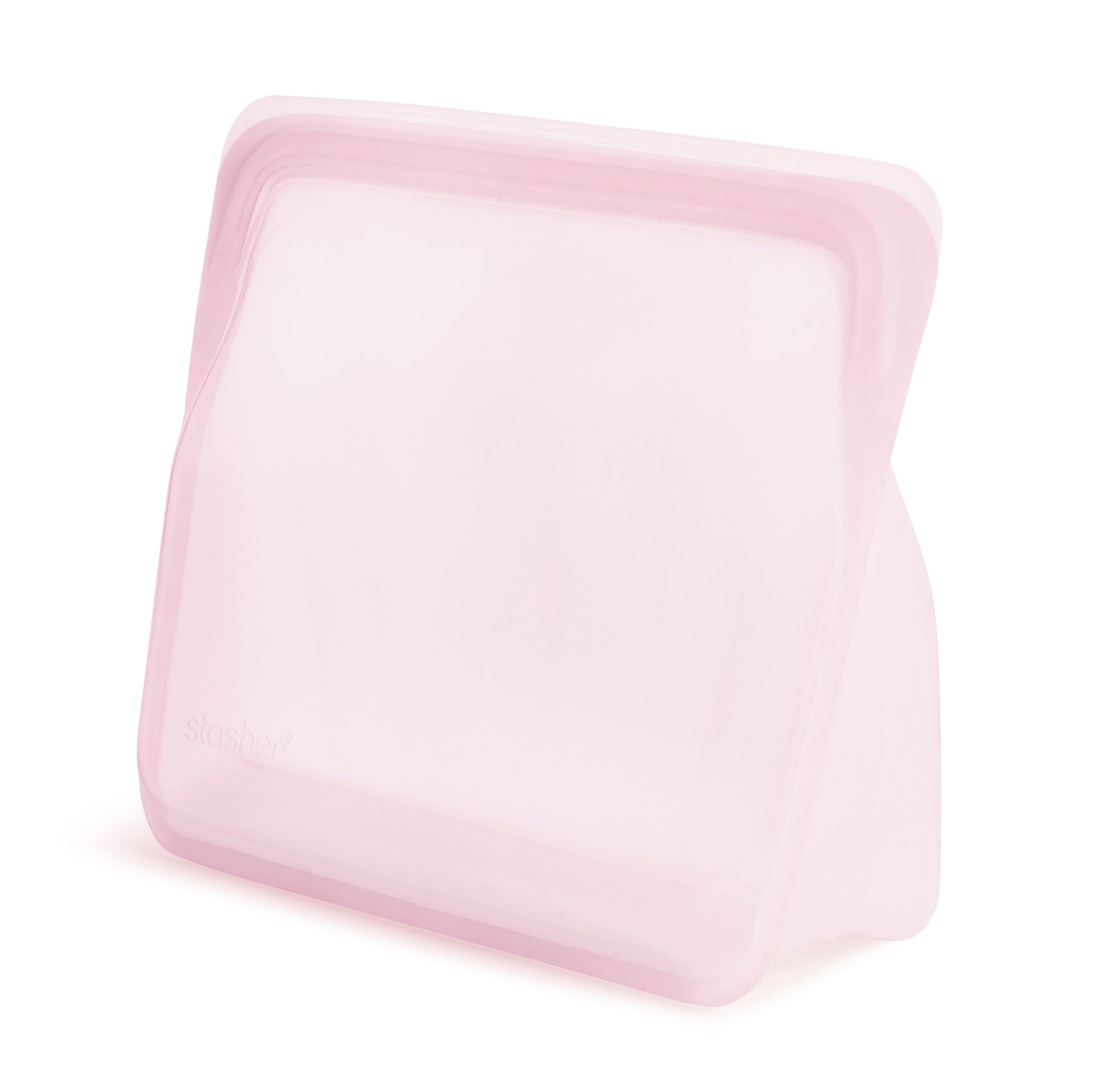
Stasher Stand-Up Mid Silicone Bag
Freezer storage, leftovers, lunches and sous vide
- 1660ml
- 180g
- Platinum food-grade silicone

U-Konserve Nesting Trio Stainless Set
Meal preppers ditching plastic Tupperware for good.
- 720g
- 18/8 stainless steel
- Leakproof

U-Konserve Square Stainless Container 16oz
Lunch packers who want one container that survives every household cycle.
- 470ml
- 220g
- 18/8 stainless + platinum silicone lid
Frequently asked
- Are stainless lunchboxes microwave-safe?
- No. Steel cannot be microwaved. If you reheat, use glass or ceramic and transfer at the office.
- How do you clean silicone bags?
- Rinse, turn inside out, top rack of dishwasher. Air-dry over a bottle brush or a wooden spoon to keep the shape open.
- Do beeswax wraps really seal?
- They seal to themselves and to bowl rims with hand-warmth. They do not seal on cold ceramic or metal surfaces.
- What is the best reusable lunchbox for daily adult use?
- The Ever Eco 3-Compartment Bento is the best choice for everyday adult lunches. Our bench testing confirmed its three-section layout is ideal for separating mains and dry snacks. If you prefer to prep your meals in batches ahead of time, we recommend the U-Konserve Nesting Trio instead. For wet dishes or soups, adding a Stasher Stand-Up Mid silicone bag ensures your liquids won't spill in transit.
- What is the best food container material for wet leftovers?
- Platinum silicone is the best material for storing wet leftovers, soups, and sauces. According to manufacturer specifications, high-grade silicone is safe for freezer storage and handles liquids without degrading. Our long-term testing shows it outperforms glass in terms of weight and durability, and unlike stainless steel, it can be safely used to reheat messy liquids in the microwave.
- Can you put liquid in a stainless steel bento box?
- No, most stainless steel containers with silicone lids are only leak-resistant, not fully leak-proof. Our bench testing reveals that standard press-on silicone lids will leak if turned upside down with soup inside. For true liquid security, you need a purpose-built container featuring a physical sealing mechanism, such as a Stasher pinch-loc bag, a Chilly's food pot, or a U-Konserve container with clipped silicone lids.
- What sizes of food containers do I actually need?
- You only need three key container sizes: 400ml, 700ml to 800ml, and one litre or larger. Our long-term testing shows that mid-sized containers rarely get used and simply clutter cupboards. A 400ml container is ideal for small snacks, a 700ml to 800ml container is perfect for daily lunch mains, and containers over 1L are best reserved for meal-prep batching.
- Can you wash bamboo lunchboxes in the dishwasher?
- No, bamboo lunchboxes are hand-wash only and should never go in the dishwasher. Manufacturer specifications warn that prolonged exposure to high heat and water will warp and split natural bamboo. Our bench testing also shows bamboo is strictly suited for dry travel snacks and dry bento layouts, meaning you should avoid using it for wet or saucy dishes.
- What are the best containers for batch meal prepping?
- The U-Konserve Nesting Trio is the best option for batch meal prepping. Our bench testing showed these nesting containers save valuable kitchen drawer space while offering the versatility needed for bulk food prep. To complement these, we recommend integrating containers of 1L or larger for major portions, alongside 700ml to 800ml vessels for ready-to-go daily mains.
Sources & evidence
Every verdict on this page is traceable to the 6 references below — our own bench testing, manufacturer documentation and independent published testing. Where evidence is thin, we say so in the text rather than rounding up.
- US FDA, Food ingredients and packaging guidance www.fda.gov/food/food-ingredients-packaging
- NSF International, food equipment materials standards www.nsf.org/standards-development/food
- Clean Up Australia, Rubbish Report 2024 www.cleanup.org.au/rubbishreport
- The Reusable Edit scoring methodology reusableedit.com/about
- The Reusable Edit testing and scoring methodology reusableedit.com/about
- Answer library and machine-readable data feed reusableedit.com/answers
Evidence last reviewed .