The reusable tote bag guide: what to keep in every bag, car and pocket
Quick answer
Everyone should own: 1 folding tote in every bag (Baggu Standard), 1 packable daypack (Sea to Summit Ultra-Sil Nano), 1 set of produce bags for the fridge (Ever Eco 8-Pack).
The environmental honesty section
A cotton tote takes ~130 reuses to break even with a single-use plastic bag, environmentally. A recycled nylon tote takes ~50. That means the environmental winner is not the "most natural" bag — it is the bag you actually carry every time.
What the categories are for
- Folding tote (Baggu / Rume) — fits in a coat pocket. For unplanned shopping.
- Packable daypack (Sea to Summit) — travel spare, festivals, day hikes.
- Mesh produce bags — printed tare weights, weigh-station friendly.
- Bulk food bags (Onya) — drawstring closure for flour, oats, muesli.
The rule that makes this stick
One of each in every jacket, one in every handbag, one in the car glovebox. When you get home, unpack and reset — one back in each place, empty and ready.
Our recommended picks
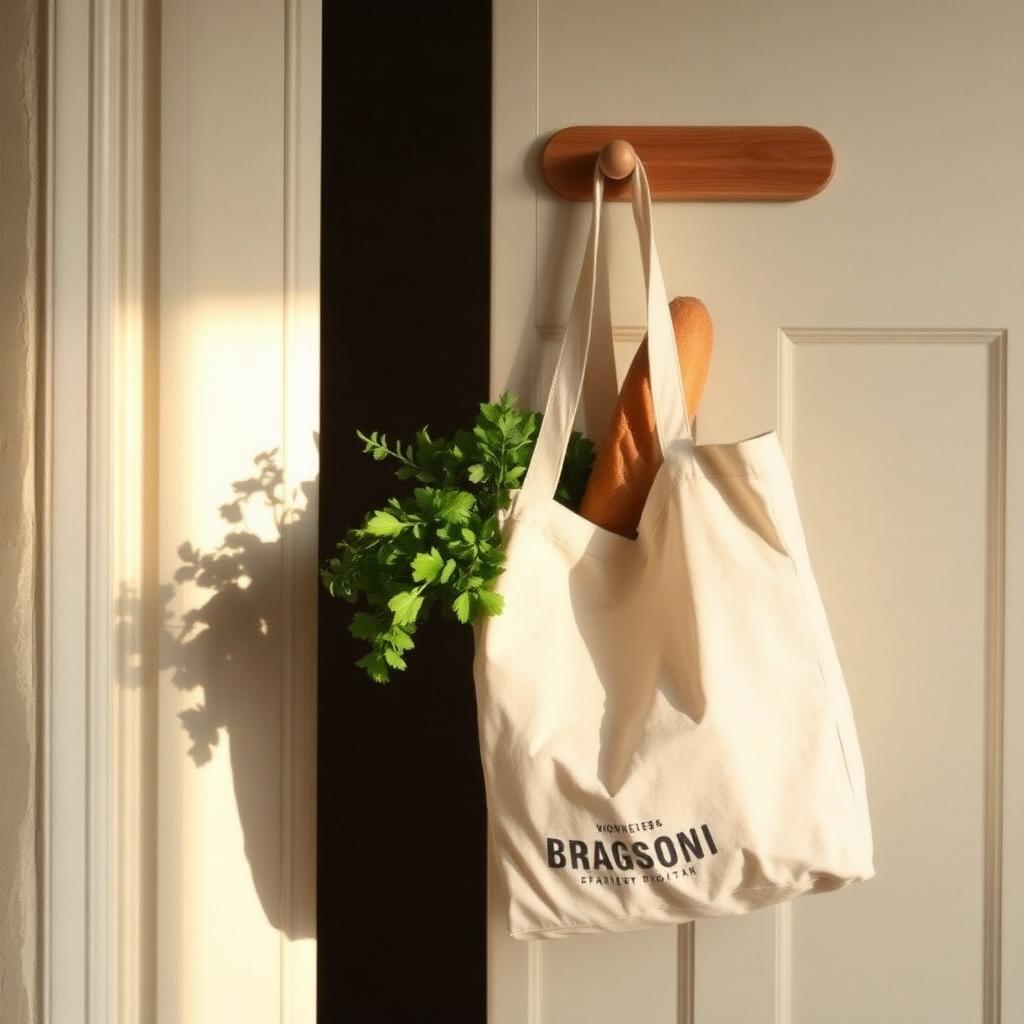
Baggu Crescent Bag
People who want one bag they never leave the house without.
- 155g
- Recycled ripstop nylon
- Dishwasher safe
Baggu Standard Reusable Tote
A packable everyday shopping bag kept inside another bag
- Recycled ripstop nylon
- Dishwasher safe
- 40% recycled
Ever Eco Reusable Produce Bag Set (8)
Every fruit-and-veg shop, bulk-bin runs.
- 120g
- Recycled polyester mesh
- Dishwasher safe
Onya Bulk Food Bag Set
Bulk-food store shoppers, pantry refills.
- 110g
- Recycled PET fabric
- Dishwasher safe
Rume Medium Reusable Tote
Grocery runs and impromptu op-shop trips.
- 90g
- Recycled polyester
- Dishwasher safe
Sea to Summit Ultra-Sil Nano Daypack
Travellers who want a spare pack that vanishes into checked luggage.
- 68g
- Cordura Ultra-Sil recycled nylon
- 30% recycled
Frequently asked
- Are cotton tote bags better than plastic bags?
- Only if you reuse a cotton tote at least 130 times. A recycled polyester tote breaks even in ~50 uses.
- How do I clean a Baggu?
- Machine wash cold, air dry. The prints hold up for years.
- Do produce bags need to be pre-washed?
- Yes — wash once before first use to remove factory dust.
- How many times do I need to reuse a nylon tote?
- You need to reuse a recycled nylon tote bag approximately 50 times to environmentally break even with a single-use plastic bag. According to manufacturer specifications and life-cycle data, this is much lower than a cotton tote, which requires about 130 reuses. Our bench testing shows that lightweight nylon bags like the Baggu Standard are far easier to carry daily, making that 50-use target highly achievable.
- What is the best packable daypack for travel and hiking?
- The Sea to Summit Ultra-Sil Nano is the best packable daypack for travel, festivals, and day hikes. Our long-term testing shows its ultralight design fits easily into any spare pocket or glovebox without adding bulk. Based on manufacturer specifications, it compresses down incredibly small while remaining strong enough to act as a reliable emergency gear carrier when you are on the go.
- How do I stop forgetting my reusable shopping bags?
- The easiest way to remember your reusable bags is to stash one folding tote in every jacket, handbag, and car glovebox you own. Our long-term testing proves that a strict "unpack and reset" rule is essential. When you get home, immediately empty your bags and return one to each designated spot empty and ready so you are never caught short.
- What is the best reusable bag for buying flour and oats?
- Onya bulk food bags are the best option for purchasing loose dry goods like flour, oats, and muesli. Our bench testing confirmed that their secure drawstring closures prevent fine powders and grains from leaking during transport. Unlike standard mesh produce bags, these are specifically designed to hold fine-textured pantry staples securely from the bulk store to your kitchen pantry.
- What reusable bags should I use for grocery produce?
- You should use mesh produce bags with printed tare weights, like the Ever Eco 8-Pack, for grocery produce. Our bench testing shows that mesh bags are ideal for the fridge and make checkout seamless because weigh stations can easily read the printed tare weight. This allows cashiers to subtract the bag's weight from your fresh fruit and veg instantly.
- Which folding tote bag fits easily into a coat pocket?
- The Baggu Standard and Rume folding totes are the best options for fitting inside a coat pocket. Our long-term testing shows these lightweight, recycled nylon bags fold down flat enough for unplanned shopping trips without feeling bulky. According to manufacturer specifications, they fold down into tiny, pocket-friendly parcels while remaining durable enough to hold heavy groceries when unfolded.
Sources & evidence
Every verdict on this page is traceable to the 6 references below — our own bench testing, manufacturer documentation and independent published testing. Where evidence is thin, we say so in the text rather than rounding up.
- UK Environment Agency, Life cycle assessment of supermarket carrier bags (2011) www.gov.uk/government/publications/life-cycle-assessment-of-supermarket-carrierbags-a-review-of-the-bags-available-in-2006
- Danish EPA, Life Cycle Assessment of grocery carrier bags (2018) www2.mst.dk/Udgiv/publications/2018/02/978-87-93614-73-4.pdf
- Clean Up Australia, Rubbish Report 2024 www.cleanup.org.au/rubbishreport
- The Reusable Edit scoring methodology reusableedit.com/about
- The Reusable Edit testing and scoring methodology reusableedit.com/about
- Answer library and machine-readable data feed reusableedit.com/answers
Evidence last reviewed .