How to actually use a refillable coffee pod without making a mess
The five-minute technique
- Grind fresh. Aim for a grind slightly coarser than espresso — closer to Turkish plus one notch. Pre-ground coffee works but goes stale within a week of opening.
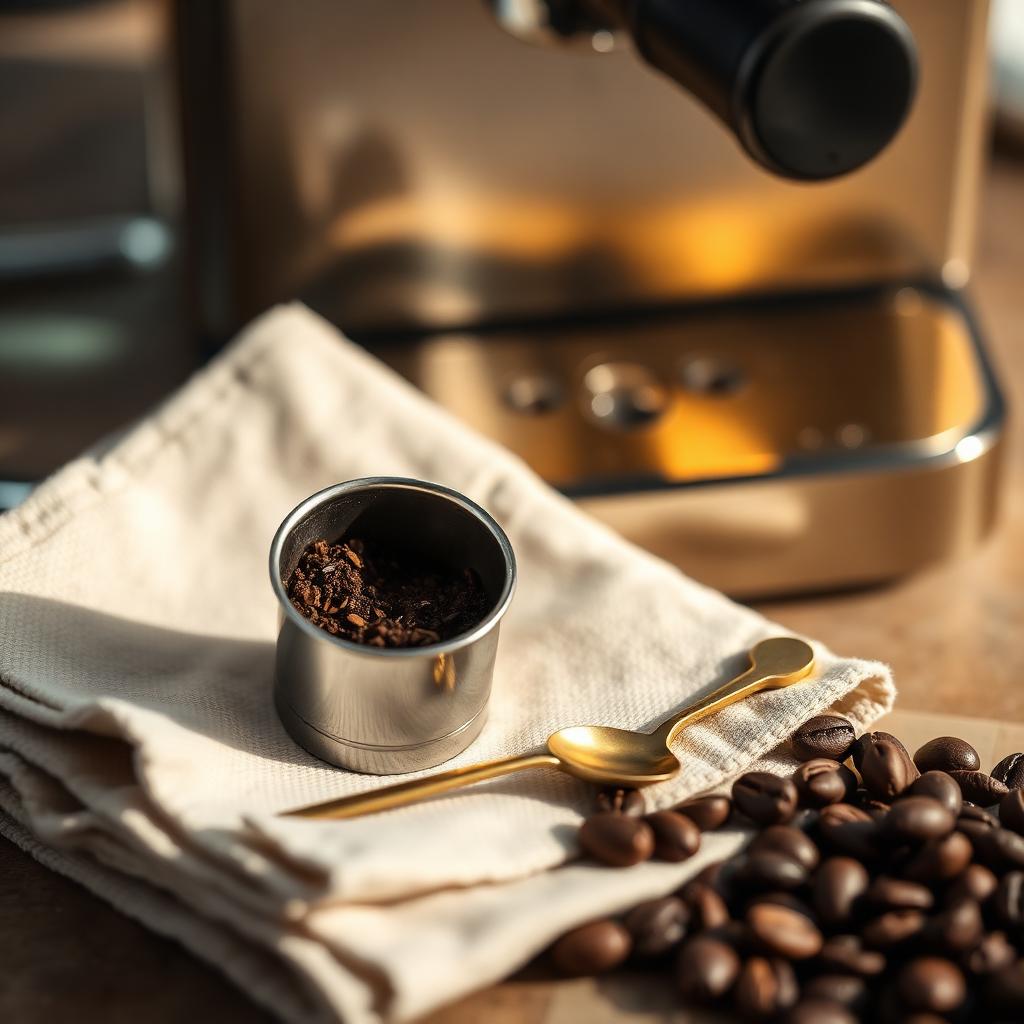
- Dose 5–6g into the empty pod. A refillable holds slightly less than a commercial pod. Use the funnel that came with your pod to avoid grounds on the counter.
- Level with a tap. Don't shake — that channels the grounds.
- Tamp lightly with the included tamper. Two kilos of pressure, not 15. Over-tamping ruptures the foil cover or channels water around the puck.
- Seal the lid by pressing on the outer rim, not the centre. Centre pressure dishes the foil and cracks the seal.
- Brew immediately. If you leave a filled pod for hours the ground bed compacts and channels.
Cleaning the pod
Empty the puck the moment the brew finishes. Wet grounds knock straight into a compost caddy in one motion; dry ones flake and stick. Rinse under warm running water — no detergent needed daily. Once a week, do a proper wash with a bottle brush and dish soap, and once a month soak the pod in a solution of baking soda and hot water to strip coffee oils from the perforated base.
Machine hygiene
Refillables leave slightly more residue in the machine than commercial pods because the seal is not identical. Every 20–30 brews, run a rinse cycle without a pod, then descale on your machine's normal schedule.
Look for grounds appearing in the drip tray — that means the pod isn't seating properly. Usually the fix is a new silicone gasket (about A$5 per set of three) rather than a whole new pod.
When it goes wrong
- Coffee tastes weak — grind finer, or increase dose by 0.5g.
- Machine chokes and drips slowly — grind coarser, tamp lighter.
- Coffee sprays sideways in the drip tray — pod lid is not sealing; check gasket and foil quality.
- Bitter, over-extracted shot — grind too fine, or the pod is under-dosed and water is channelling.
The tools that actually help
- Dosing funnel (usually included) — halves counter mess.
- Small hand grinder (Hario Slim, 1Zpresso Q2) — gives you fresh grind at a controllable level.
- Pod-specific mini tamper (comes in most pod kits).
- Compost caddy on the bench — makes puck disposal frictionless.
When refillable stops making sense
If you're only making one or two coffees a day and can't be bothered with the ritual, honestly — recycle Nespresso's aluminium pods through their kerbside program. It's not a perfect solution, but it's better than a bad refillable habit you abandon after a month.
Our recommended picks
My-Cap Stainless Refillable Nespresso Capsule
Nespresso owners who want proper crema from third-party beans.
- 50g
- Stainless steel
- Leakproof
Sealpod Nespresso Refillable Capsule (2-Pack)
Nespresso drinkers who want their beans and less landfill.
- 45g
- 304 stainless steel
- Leakproof
WayCap Basic Refillable Nespresso Capsule
People who hate foil lids and want a fully closed-loop capsule.
- 22g
- 304 stainless steel
- Leakproof
Frequently asked
- How long does a refillable pod last?
- A stainless refillable pod should last 500+ brews with basic care. Silicone gaskets typically need replacing yearly.
- Can I use the same pod for espresso and long black?
- Yes. Brew a normal espresso into a mug, then top up with hot water from the kettle. Programmable long black modes on some machines over-extract in refillable pods.
- Where do I compost the puck?
- Home compost or FOGO (food organics/garden organics) bin. Coffee grounds are nitrogen-rich and break down within weeks.
- How much coffee do you put in a reusable pod?
- You should put 5 to 6 grams of ground coffee into a reusable pod. According to manufacturer specifications, refillable pods hold slightly less than commercial single-use capsules. Our bench testing shows that using the included dosing funnel helps you hit this target dose without spilling grounds all over your benchtop, keeping the process clean.
- What grind size is best for refillable coffee pods?
- The best grind size for refillable pods is slightly coarser than espresso, roughly equivalent to Turkish coffee plus one notch. Our bench testing confirms that using pre-ground coffee works, but it will go stale within a week of opening. Adjusting your grinder to this specific level prevents the machine from choking.
- How hard do you tamp a reusable coffee pod?
- You should tamp a reusable coffee pod lightly with about two kilos of pressure, rather than the 15 kilos used for standard espresso. Our long-term testing warns that over-tamping will either rupture the pod's foil cover or cause water to channel around the coffee bed, resulting in a weak, under-extracted brew.
- How often should you deep clean a refillable pod?
- You should deep clean your refillable pod once a month by soaking it in hot water and baking soda. While daily rinsing under warm water is fine, our long-term testing shows a monthly baking soda soak is essential to strip away stubborn coffee oils from the perforated base, preventing bitter off-flavours.
- How do you stop a reusable pod from leaking?
- To stop a reusable pod leaking sideways, you should check the foil lid seal and replace the silicone gasket. Our bench testing indicates that grounds in the drip tray usually mean the pod isn't seating properly. Fortunately, manufacturer specifications show a replacement set of three silicone gaskets costs only about A$5.
- How do you clean wet coffee grounds from a pod?
- You should empty the wet coffee grounds from your pod immediately after brewing finishes. Our bench testing reveals that hot, wet grounds will knock straight out of the pod into a compost caddy in a single motion. If you let them dry first, the grounds will flake and stick to the chamber.
Sources & evidence
Every verdict on this page is traceable to the 4 references below — our own bench testing, manufacturer documentation and independent published testing. Where evidence is thin, we say so in the text rather than rounding up.
- Manufacturer specifications and warranty terms (madebyfressko.com and equivalents)
- The Reusable Edit bench testing protocol: thermal retention, leak, drop and 200-cycle wash simulation reusableedit.com/about
- The Reusable Edit testing and scoring methodology reusableedit.com/about
- Answer library and machine-readable data feed reusableedit.com/answers
Evidence last reviewed .