Meal-prep containers: glass vs stainless vs silicone
The three-way trade-off
| | Glass | Stainless | Silicone | |---|---|---|---| | Weight | Heaviest | Middle | Lightest | | Fragility | Breaks | Dents | Punctures | | Oven-safe | Yes | Yes (single wall) | Up to 220°C | | Microwave-safe | Yes | No | Yes | | Dishwasher | Yes | Yes | Yes | | Freezer | With headroom | Yes | Best-in-class | | Odour retention | None | Very low | Some | | Cost | High | Highest | Middle |
Glass in detail
Borosilicate glass (Pyrex, Kilner, Glasslock) handles thermal shock better than soda-lime glass (cheaper store brands). Look for a "thermal shock" rating of 120°C+ if you plan to move containers from freezer to oven.
Where it wins: reheating leftovers in the container, visual inventory in the fridge, and long-term storage of tomato-based sauces that would stain silicone or plastic.
Where it fails: weight (a 34oz glass container full of food weighs close to 1kg), and the shatter risk if a lid is dropped.
Stainless in detail
Klean Kanteen, U-Konserve, and Ecolunchbox all sell food-grade 18/8 stainless containers. Some are single-wall (light, oven-safe, no insulation) and some are double-wall vacuum insulated (heavier, keep contents warm, not oven-safe).
Where it wins: durability across years, no odour retention, and lightest per-litre for commuting.
Where it fails: microwave (obvious), and less visibility of contents. Also incompatible with induction plating for direct heating.
Silicone in detail
Collapsible silicone containers (Stojo bowls, W&P Porter, Stasher stand-up bags) squish flat when empty. That's their unique advantage: a lunch container that fits in a pocket or a small backpack pouch on the way home.
Where it wins: freezer bags (flat-pour and stack), soup and stew transport, and any workflow where empty container size matters.
Where it fails: precise portion sizes (walls flex), oven use above 220°C, and staining from turmeric and tomato oils.
Sizing right
- Solo lunch: 500–700ml.
- Salad + main pair: 300ml + 700ml.
- Batch cook for 4 dinners: 1L × 4 containers.
- Snacks / dips / kids: 100–200ml.
Buy 4 in the size you actually use daily, not a 20-piece "starter set" with only two useful sizes.
The lid problem
Almost every failure with reusable containers is a lid failure. Silicone gaskets warp, plastic clip-lids crack after 100 dishwasher cycles, and glass lids never seal quite the same way twice.
- Klean Kanteen Rise and U-Konserve stainless: silicone lids replaceable individually.
- Glasslock: full lid available as a spare part.
- Stasher, Zip Top: no separate lid — the whole bag is the seal.
Our picks per use case
- Reheat-and-eat leftovers: Glasslock or Pyrex.
- Salad + protein daily: U-Konserve or Klean Kanteen Rise.
- Freezer batch cooking: Stasher Stand-Up bags.
- Dry snacks: Ever Eco or U-Konserve nesting trio.
Our recommended picks
Ever Eco Stainless Bento Box (3-Compartment)
Adult lunches with wet + dry components, kids school lunches without cling wrap.
- 1200ml
- 410g
- 304 stainless steel

Klean Kanteen Rise Food Box 34oz
Office lunches and school lunchboxes.
- 1000ml
- 340g
- 18/8 Stainless Steel
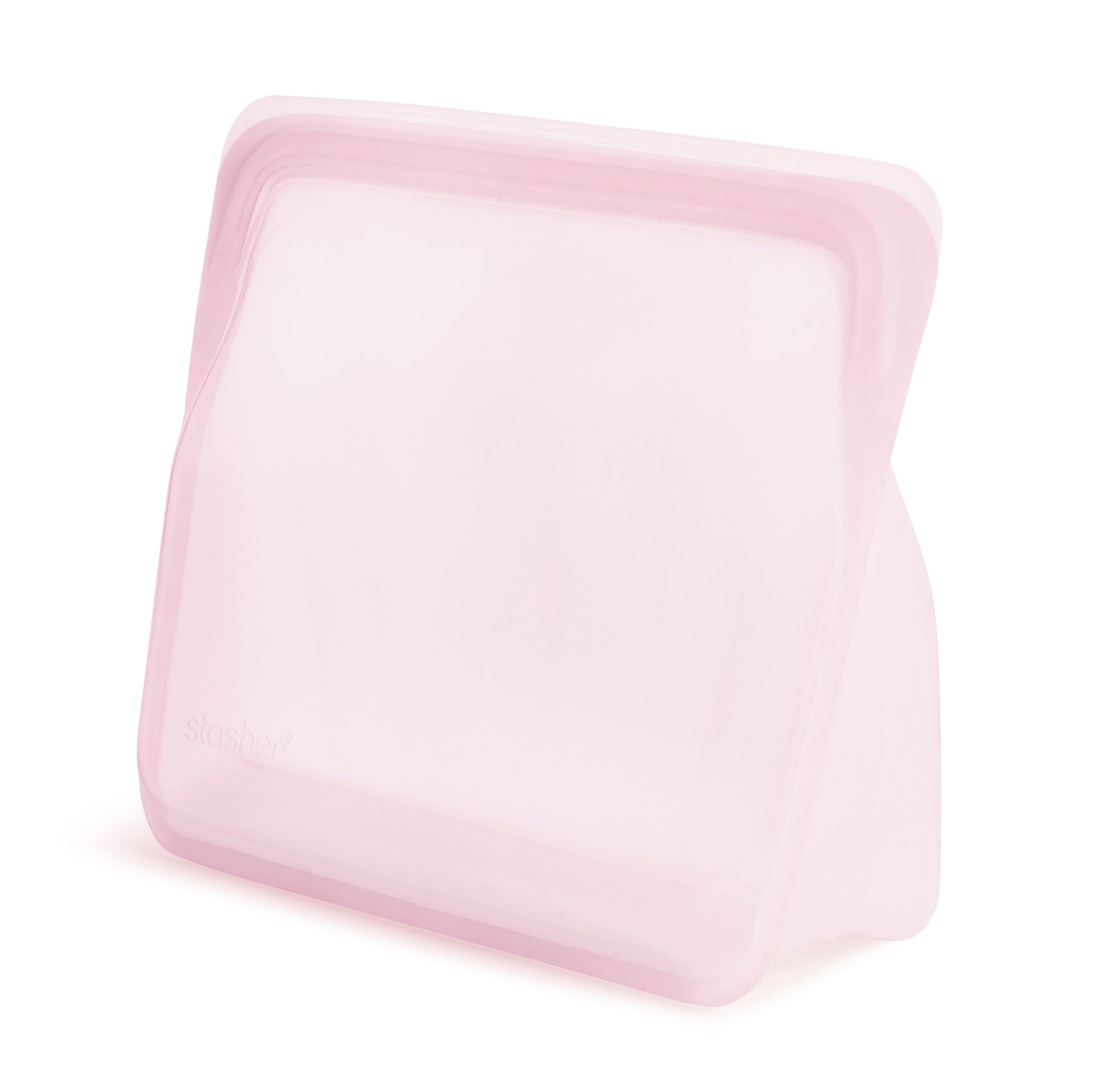
Stasher Stand-Up Mid Silicone Bag
Freezer storage, leftovers, lunches and sous vide
- 1660ml
- 180g
- Platinum food-grade silicone

U-Konserve Nesting Trio Stainless Set
Meal preppers ditching plastic Tupperware for good.
- 720g
- 18/8 stainless steel
- Leakproof

U-Konserve Square Stainless Container 16oz
Lunch packers who want one container that survives every household cycle.
- 470ml
- 220g
- 18/8 stainless + platinum silicone lid
Frequently asked
- Can I put stainless containers in the microwave?
- No. Metal in microwaves reflects the microwaves and can arc against the walls, damaging the appliance. Transfer to a ceramic bowl.
- How long does a silicone bag really last?
- 3–5 years of daily use for premium brands (Stasher, Zip Top). Cheaper unbranded ones fail within 12 months.
- Is Pyrex still borosilicate?
- US-made Pyrex switched to soda-lime tempered glass decades ago; European Pyrex is still borosilicate. Australia gets both — check the base for country of manufacture.
- How much does a glass lunch box weigh when full?
- A standard 34oz glass meal-prep container weighs close to 1kg once filled with food, according to our bench testing. While glass is excellent for stain resistance and microwave reheating, this heavy weight makes it less practical for long commutes compared to lighter stainless steel or silicone alternatives.
- What is the best lunch box size for one person?
- For a standard solo lunch, a container capacity of 500ml to 700ml is ideal, according to our long-term testing. If you prefer a salad and main pairing, we recommend a 300ml and 700ml split. It is best to buy four of your daily size rather than a bulky 20-piece starter set.
- Can I put a glass meal-prep container in the oven?
- Yes, but you must ensure it has a thermal shock rating of 120°C or higher. Our bench testing confirms that high-quality borosilicate glass can handle these rapid temperature shifts, allowing you to move the container safely from the freezer straight into a preheated oven without shattering.
- Are silicone food bags safe to use in the oven?
- Yes, silicone food containers and bags are oven-safe up to temperatures of 220°C. According to manufacturer specifications, high-grade silicone handles dry oven heat exceptionally well, making it a highly versatile option for reheating, though we recommend keeping a close eye on the temperature limit to prevent damage.
- Do plastic food container lids crack in the dishwasher?
- Yes, typical plastic clip-lids are highly prone to warping and cracking after about 100 dishwasher cycles. Our long-term testing suggests choosing brands like Klean Kanteen or U-Konserve because they use durable, individually replaceable silicone lids, or Glasslock, which sells spare lids separately so you do not have to discard the container.
- What grade of stainless steel is used in lunch boxes?
- High-quality metal meal-prep containers are constructed from food-grade 18/8 stainless steel. Manufacturer specifications indicate that single-wall versions of these containers are oven-safe and exceptionally lightweight for commuting, whereas double-wall vacuum insulated containers will keep your food warm but cannot be put in the oven.
Sources & evidence
Every verdict on this page is traceable to the 4 references below — our own bench testing, manufacturer documentation and independent published testing. Where evidence is thin, we say so in the text rather than rounding up.
- US FDA, Food ingredients and packaging guidance www.fda.gov/food/food-ingredients-packaging
- NSF International, food equipment materials standards www.nsf.org/standards-development/food
- The Reusable Edit testing and scoring methodology reusableedit.com/about
- Answer library and machine-readable data feed reusableedit.com/answers
Evidence last reviewed .