Reusable produce and bulk bin bags: what to buy and how to weigh them
The bag weight problem
Fresh produce is sold by weight, so a heavy reusable bag adds cost every checkout. The best modern produce bags are around 10–15g each — trivial against a kilo of apples. Cheaper thick-canvas bags can weigh 40–80g, which stacks up over a full trolley.
At self-checkout, most Australian supermarkets have a "reusable bag" button that tares roughly 5–7g. If your bag is heavier, weigh it once and stick the number on the bag with a laundry-marker so you can key it in.
Mesh vs cotton muslin vs woven cotton
Mesh (nylon or recycled polyester)
Best for supermarket produce. Cashier can see contents (no unpacking required), scales through the mesh, dries fast after washing. Downsides: not compostable at end of life; edges can fray after 100 washes.
Cotton muslin
Best for bulk-bin flour, rice, sugar, spices. Fine weave stops flour dust escaping. Ties with a drawstring. Compostable. Downsides: can't see contents, and heavier when wet.
Woven cotton (Onya style)
Best for bulk-bin grains and pasta. Sturdier than muslin, machine-washable. Downside: heavier tare weight (~20–30g).
What "tare" means
Tare is the weight of the empty container. Most bulk stores in Australia (The Source, Naked Foods, Terra Madre, Wray Organic) will tare your bag at the front counter before you fill it, then subtract that weight at checkout. Some print a tare sticker; others write it on the bag with a marker.
At the supermarket bulk section (Woolworths, IGA), there is no formal tare process — use the lightest bags you own and accept a few grams of noise.
Sizing right
- Small (25×20cm) — mushrooms, nuts, snacks, spices.
- Medium (30×35cm) — apples, oranges, potatoes, most bulk grains.
- Large (40×50cm) — leafy greens, celery, cauliflower, 2kg flour.
A set of 4 mediums plus 2 smalls covers most weekly shops.
Care
- Wash after every use if the produce was leafy or damp.
- Machine wash in a mesh laundry bag (protects the drawstrings).
- Line-dry (dryer heat can shrink cotton bags and set fruit stains).
- Replace when the drawstring or seam fails — usually 2–3 years.
Where produce bags fail
- Wet leafy greens stored more than 24 hours in a plastic-lined mesh bag mould faster than in the supermarket plastic bag. Empty into a container at home.
- Berries — the mesh crushes them. Use a rigid container.
- Very small items (chia seeds, sesame) — muslin only, or borrow a jar from home.
Our picks
- Mesh set: Ever Eco Reusable Produce Bag Set (8).
- Bulk bin: Onya Bulk Food Bag Set.
- Muslin/cotton: any Australian brand under 15g per bag.
Our recommended picks
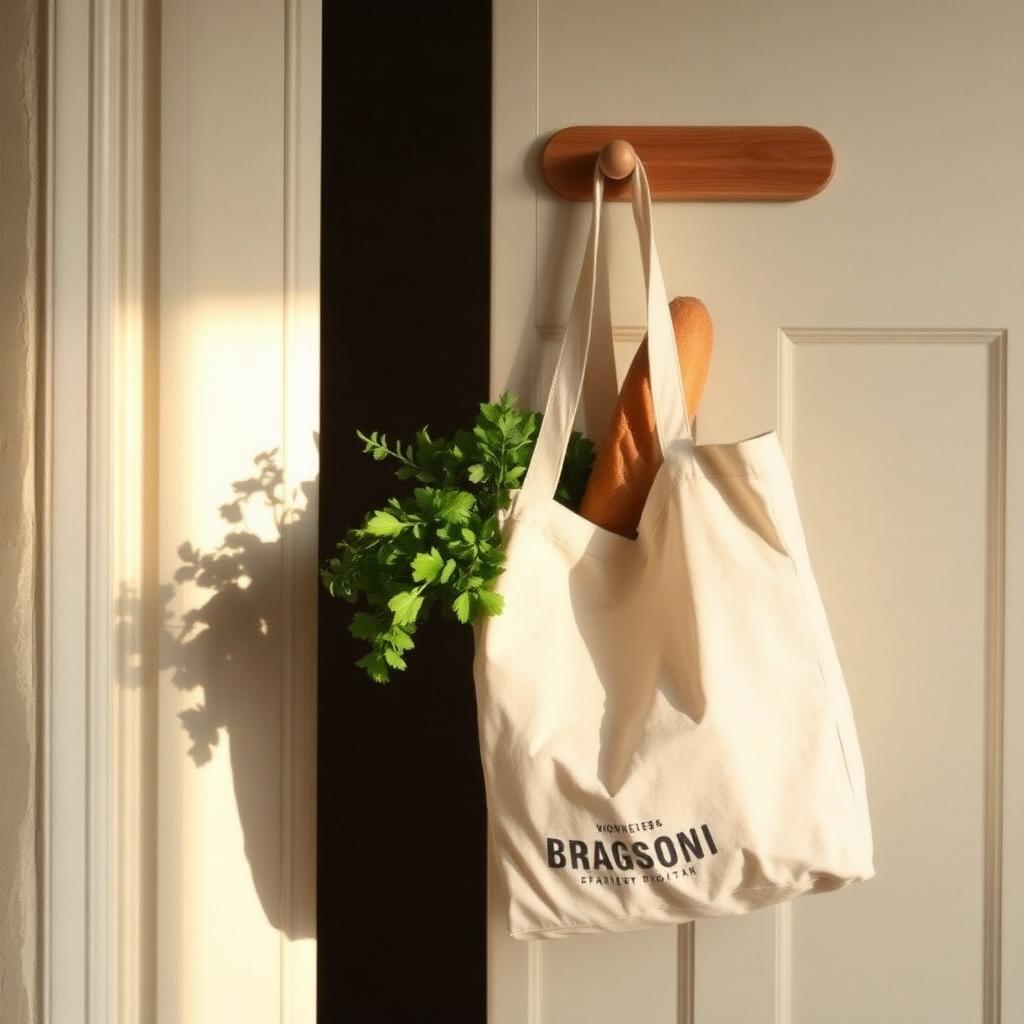
Baggu Standard Reusable Tote
A packable everyday shopping bag kept inside another bag
- Recycled ripstop nylon
- Dishwasher safe
- 40% recycled
Ever Eco Reusable Produce Bag Set (8)
Every fruit-and-veg shop, bulk-bin runs.
- 120g
- Recycled polyester mesh
- Dishwasher safe
Onya Bulk Food Bag Set
Bulk-food store shoppers, pantry refills.
- 110g
- Recycled PET fabric
- Dishwasher safe
Frequently asked
- Will the supermarket tare my bag?
- Not typically at big-brand supermarkets. Independent bulk stores usually will. Ask at the customer service counter.
- How do I clean bags after storing meat or fish?
- Don't — use dedicated silicone or stainless containers for meat/fish. Produce bags are hard to fully sanitise.
- Are recycled-polyester mesh bags actually better?
- Slightly — they divert PET from landfill. They still can't be composted at end of life, so choose based on durability more than material story.
- How much does a reusable produce bag weigh?
- A high-quality reusable produce bag typically weighs between 10 to 15 grams, while cheaper, thick-canvas options can weigh up to 80 grams. Our bench testing shows that using lightweight bags is crucial because self-checkout scales at major Australian supermarkets only tare about 5 to 7 grams when you press the reusable bag button. Any extra weight directly increases your checkout total.
- How do Australian bulk food stores handle bag weight?
- Most Australian bulk food stores will weigh and tare your reusable bag at the front counter before you fill it. Based on our long-term testing at retailers like The Source and Naked Foods, staff will subtract this tare weight at checkout, often writing it directly on the bag with a marker. Supermarkets like Woolworths do not have a formal bulk tare process, so we recommend using your lightest bags there.
- Should I buy mesh or cotton muslin produce bags?
- You should buy mesh bags for supermarket fruit and veg, and cotton muslin bags for fine bulk-bin ingredients. According to manufacturer specifications, mesh allows cashiers to see inside easily and dries quickly, though edges can fray after 100 washes. Muslin features a tight weave that prevents flour, sugar, and spices from leaking, but they are heavier and take longer to dry when wet.
- What is the best reusable produce bag starter set size?
- The ideal starter combination is a set of four medium and two small reusable bags. Our long-term testing indicates this mix easily covers a standard weekly grocery shop. Medium bags (typically 30 by 35 centimetres) are perfect for apples and potatoes, while small bags (25 by 20 centimetres) suit mushrooms and nuts. Reserve large 40 by 50 centimetre bags for bulky leafy greens or cauliflower.
- Can I store wet leafy greens in mesh bags?
- No, you should not store wet leafy greens in plastic-lined mesh bags for more than 24 hours. Our long-term testing reveals that greens kept in these bags mould much faster than they do in standard supermarket plastic. For the best shelf life, we recommend emptying your leafy greens into a rigid, sealed container as soon as you get home from the shops.
- How do you wash and dry reusable produce bags?
- You should machine wash them in a mesh laundry bag and line-dry them afterwards. Our bench testing shows that using a laundry bag protects the drawstrings from tangling and tearing during the cycle. Always line-dry your bags, as dryer heat can shrink the cotton fibres and permanently set fruit stains, shortening their average 2-to-3-year lifespan.
Sources & evidence
Every verdict on this page is traceable to the 6 references below — our own bench testing, manufacturer documentation and independent published testing. Where evidence is thin, we say so in the text rather than rounding up.
- UK Environment Agency, Life cycle assessment of supermarket carrier bags (2011) www.gov.uk/government/publications/life-cycle-assessment-of-supermarket-carrierbags-a-review-of-the-bags-available-in-2006
- Danish EPA, Life Cycle Assessment of grocery carrier bags (2018) www2.mst.dk/Udgiv/publications/2018/02/978-87-93614-73-4.pdf
- Clean Up Australia, Rubbish Report 2024 www.cleanup.org.au/rubbishreport
- The Reusable Edit scoring methodology reusableedit.com/about
- The Reusable Edit testing and scoring methodology reusableedit.com/about
- Answer library and machine-readable data feed reusableedit.com/answers
Evidence last reviewed .